Last updated: Oct 9, 2026.
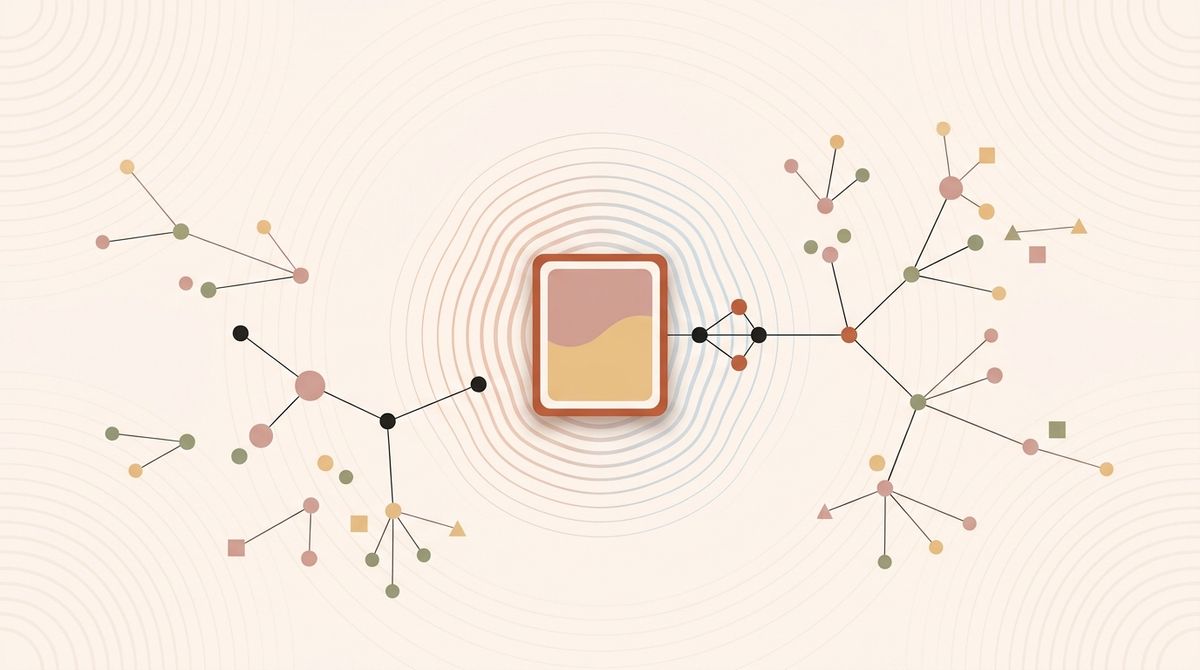
The LinkedIn algorithm decides who sees your post based on early engagement, topical relevance, and how connected you are to each viewer — not by chronological order. When you publish, LinkedIn shows the post to a small slice of your network; strong early reactions and comments signal quality, and the post is then shown to progressively wider audiences.
The stages a LinkedIn post goes through
- Initial sample. LinkedIn shows the post to a fraction of your connections and followers.
- Early-engagement test. Likes, comments, reposts, and — crucially — dwell time in the first hour or two tell the system whether it's worth spreading.
- Wider distribution. Posts that pass keep expanding to second- and third-degree networks; posts that don't quietly fade.
What the algorithm rewards in 2026
- Comments over likes. Conversation signals value more strongly than a tap.
- Dwell time. People stopping to read (and expanding "see more") is a powerful signal.
- Relevance. Content close to your usual topics reaches the right people faster.
- Relationships. Engagement from people who regularly interact with you carries more weight.
- Native content. Text, documents, and native video tend to outperform posts that push people off-platform immediately.
LinkedIn isn't ranking your post against the clock. It's ranking it against your audience's attention — and attention is earned in the first hour.
What tends to suppress reach
- Leading with an external link (some reach penalty for sending people away).
- Engagement bait and generic filler that earns taps but no real dwell.
- Posting so often that each post cannibalizes the last — see the myth of daily posting.
How to work with it, not against it
Open with a strong hook so people stop and expand (hook formulas). Post when your audience is active, then be present to reply for the first hour — that early conversation is what unlocks distribution. Consistency compounds: the algorithm favors accounts it has learned to trust.
FAQ
How many times a day should you post on LinkedIn?
Once a day is plenty; more can split your own reach. Quality and early engagement beat volume.
Do hashtags help on LinkedIn?
A few relevant ones can aid categorization, but they're minor compared to engagement and relevance.
Does editing a post after posting hurt reach?
Small edits are generally fine. The bigger lever is the first hour of engagement, not later tweaks.
Timing your post for peak activity while you focus elsewhere is what the LinkedIn scheduler handles for you.
Put this on autopilot.
Orymus plans, writes and posts — you just approve.
Keep reading
 Strategy
What Is Evergreen Content? (With Examples)
Evergreen content stays relevant and useful long after it's published. Here's what it is, examples, and why it's a solo creator's best asset.
 Growth
What Is Social Proof? (And How to Use It on Social Media)
Social proof is the tendency to trust something because others do. Here's what it is, the main types, and how to use it without sounding boastful.