
Last updated: Sep 11, 2026.
Organic social media is any content you post for free that reaches people through normal distribution. Paid social media is content you pay the platform to show to a targeted audience, such as ads or boosted posts. Organic builds trust and audience over time; paid buys reach quickly. Most strong strategies use both, but they serve different jobs.
Organic vs paid at a glance
- Organic: free, slower, compounding. Builds relationships, credibility, and an owned audience. Reach depends on the algorithm and your content quality.
- Paid: costs money, fast, controllable. Buys guaranteed reach to a chosen audience. Stops the moment you stop paying.
When to use organic
Organic is the foundation for most solo founders and small businesses. It's how you build a real audience, establish a voice, and earn trust — none of which you can buy convincingly. It's slower, but it accumulates: a year of consistent organic posting is an asset that keeps paying.
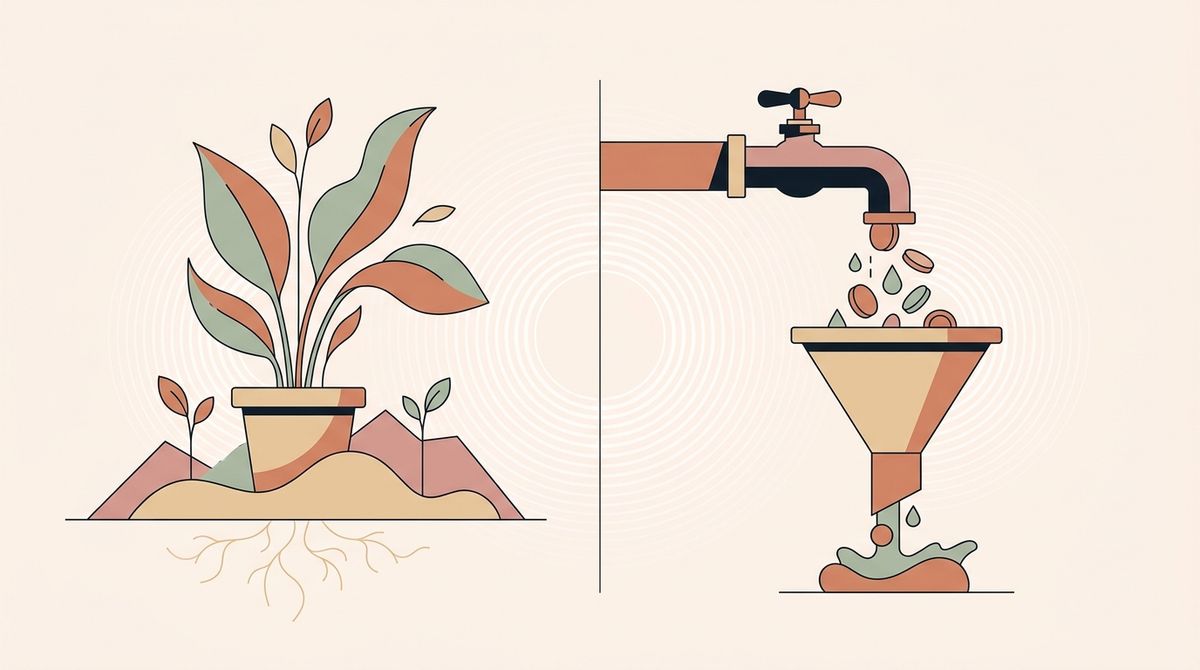
Organic is a garden; paid is a faucet. The faucet fills the bucket fast, but the garden feeds you for years.
When to use paid
Paid makes sense when you need speed or scale: promoting a launch, testing messaging quickly, or reaching a specific audience you can't yet reach organically. It amplifies what's already working — it rarely fixes content that isn't.
The smart sequence
Build organically first so you understand what resonates and have a voice worth amplifying. Then, if it fits your goals and budget, use paid to accelerate proven content. Pouring money behind posts you haven't validated organically is the most common way to waste an ad budget.
FAQ
Is organic or paid better for a small business?
Usually start organic — it builds a durable audience and costs only time. Add paid later to accelerate what's working.
Does organic reach still work in 2026?
Yes, though it takes quality and consistency. Understanding each platform's algorithm (like LinkedIn's) is how you earn it.
Can you succeed with organic alone?
Many solo founders do. Paid is an accelerant, not a requirement.
Building a consistent organic presence without it eating your week is exactly what a scheduler makes possible.
Put this on autopilot.
Orymus plans, writes and posts — you just approve.
Keep reading
 Strategy
What Is Evergreen Content? (With Examples)
Evergreen content stays relevant and useful long after it's published. Here's what it is, examples, and why it's a solo creator's best asset.
 Growth
What Is Social Proof? (And How to Use It on Social Media)
Social proof is the tendency to trust something because others do. Here's what it is, the main types, and how to use it without sounding boastful.