Last updated: Oct 9, 2026.
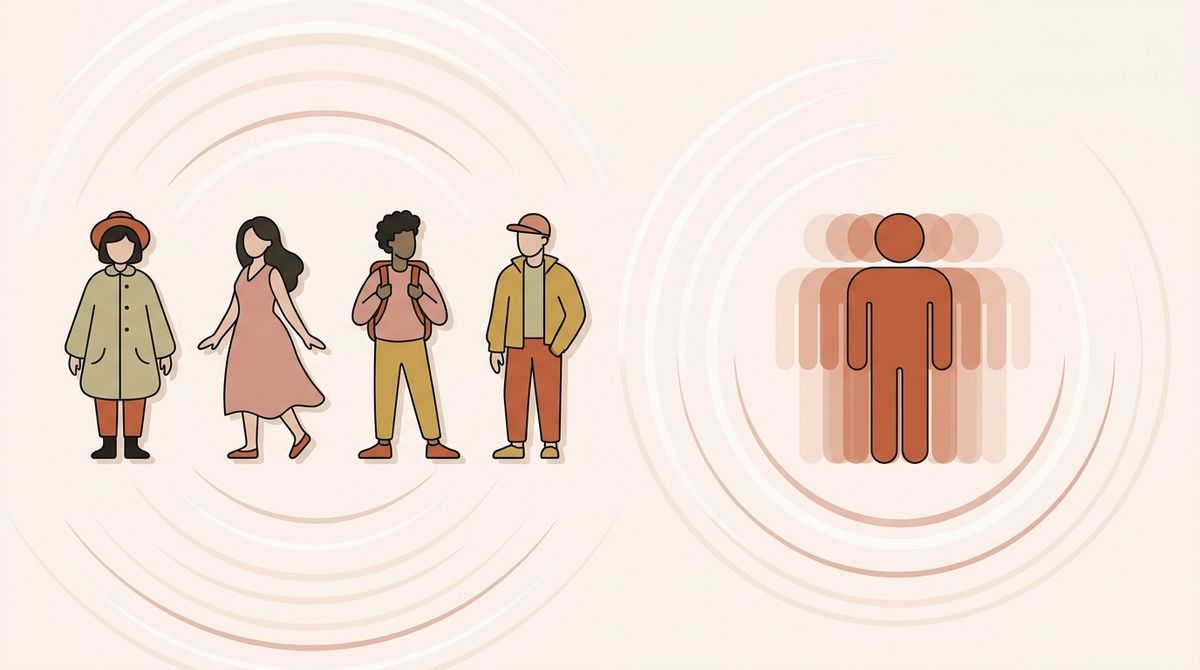
Reach is the number of unique people who saw your content. Impressions is the total number of times your content was displayed, including repeat views by the same person. If one person sees your post three times, that's 1 reach and 3 impressions. Impressions are always equal to or greater than reach.
A simple example
Say 100 different people see your post, and 30 of them see it twice. Your reach is 100 (unique people) and your impressions are 130 (total views). The gap between the two tells you how often, on average, each person saw it.
Why the difference matters
- Reach measures how far your content spread — how many new eyeballs it reached.
- Impressions measure exposure and frequency — how often it was served.
- Impressions ÷ reach = frequency. A high ratio means the same people are seeing it repeatedly; a ratio near 1 means broad, one-time exposure.
Reach tells you how many people you touched. Impressions tell you how hard you touched them. Growth usually needs the first; memory needs the second.
Which should you optimize for?
It depends on the goal:
- Building an audience? Prioritize reach — you want new people.
- Reinforcing a message or launch? Some repeat impressions help it stick.
- Diagnosing fatigue? If impressions climb while reach stalls, you're re-serving the same people — time for fresh distribution or new content.
Neither number means much without engagement rate, which tells you whether those views actually did anything — see what is engagement rate.
FAQ
Can impressions be lower than reach?
No. Impressions count every view, so they're always equal to or greater than reach.
Is reach or impressions more important?
For growth, reach. For message retention, impressions and frequency. Most dashboards show both because they answer different questions.
What's a good reach for a small account?
There's no universal number — judge reach against your follower count and trend over time, not against big accounts.
Understanding these basics makes every other metric — and every analytics comparison of tools — easier to read.
Put this on autopilot.
Orymus plans, writes and posts — you just approve.
Keep reading
 Social Media
How Does the LinkedIn Algorithm Work in 2026?
The LinkedIn algorithm ranks posts by early engagement, relevance, and relationship — not chronology. Here's what actually drives reach in 2026.
 Productivity
What Is Social Media Scheduling? A Plain-English Guide
Social media scheduling means preparing posts in advance and setting them to publish automatically at chosen times. Here's how it works and why it matters.