Last updated: Sep 16, 2026.
Every year the same holidays arrive on the same dates, and every year they somehow feel like an ambush. Seasonal content shouldn't be a last-minute scramble — it's the most predictable content you'll ever make.
Map the year once
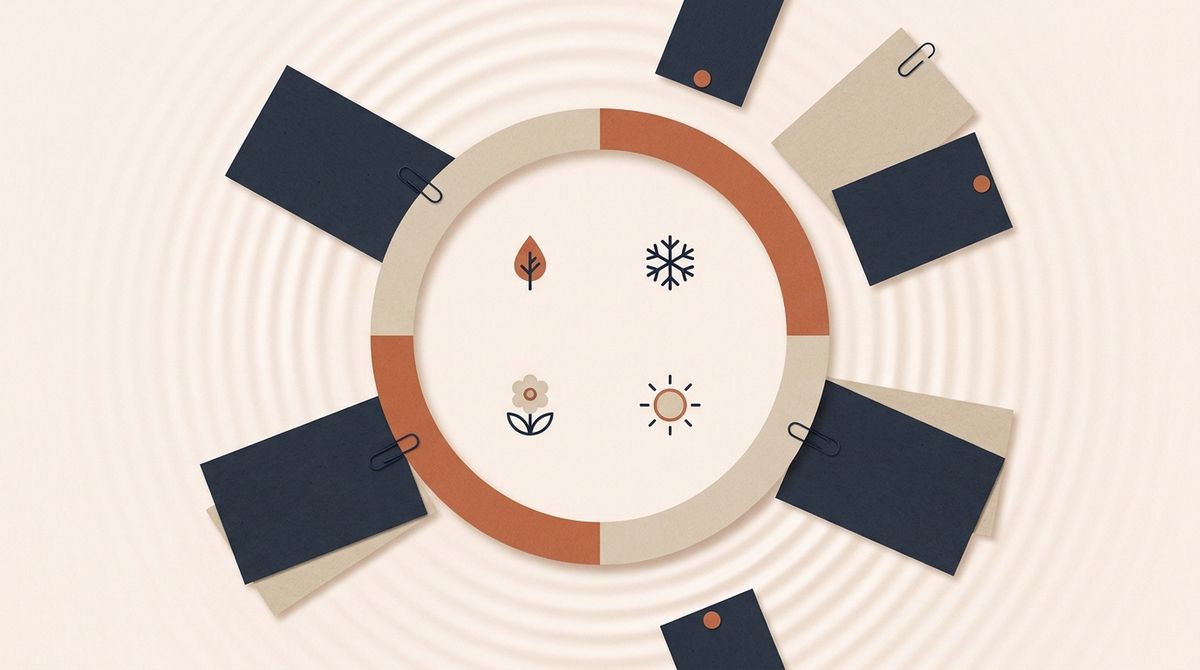
Spend an hour listing the moments that matter to your audience: major holidays, your industry's busy and slow seasons, your own launch windows, recurring events. Most businesses have ten to fifteen. That single list is your seasonal skeleton for the entire year.
Prep the predictable in advance
Because the dates never change, you can write these posts whenever you have time — months early, in a batch, calm. There's no reason to draft a year-end reflection on December 30th at 11pm. Do it in October and queue it.
Seasonal content is the only content with a due date you've known about for a year. Act like it.
Don't over-lean on holidays
A seasonal post should still sound like you. Tie the moment to your actual point of view or offer — not a generic "Happy Holidays!" graphic everyone scrolls past. The date is the hook; your substance is the post.
Queue it and forget it
Once written, seasonal posts are the perfect thing to schedule far ahead — they're not going to age. Drop them into the queue on their dates with smart scheduling, and mix in your regular cadence around them. When the holiday arrives, you've already handled it.
The scramble is optional. The calendar told you these dates a year ago — plan like you were listening.
Put this on autopilot.
Orymus plans, writes and posts — you just approve.
Keep reading
 Strategy
Quality vs Quantity on Social Media: What Moves the Needle
Quality vs quantity on social media isn't a real fight. Here's the resolution — and the volume you need before quality even starts to matter.
 Strategy
Organic vs Paid Social Media: What's the Difference?
Organic social media is content you post for free; paid is content you pay to promote. Here's how they differ and when to use each.